Becoming Familia

Rather than a (late) blog post for this week, I thought I would share what I’ve been working on the past two weeks. This last Sunday, I had the amazing opportunity to preach at my church, The Church We Hope For.

I preached on Becoming Familia, which is one of our church values, but seems like one of my life values as a foster parent. I shared about attachment theory, how that affects our willingness to connect with God and others, and the importance of earned secure attachment.

If you want to check it out, feel free to watch it on YouTube! The service is about 90 minutes long, but I start preaching about halfway through, at 43 minutes in.

Enjoy!

Stuck In the In Between

I’m used to being the in between placement for my babies. I’m after their first family, but before they’re reunified or sent to live with a family member or a foster family. A lot about being an ESH home is about waiting in between.

It’s about starting up medical referrals that I probably won’t be able to see through. Setting up therapies and Regional Center services that won’t start until months after my baby leaves my care.

But the little girl who is currently in my care has been in my care for almost 10 months. TEN MONTHS. That’s an obscene amount of time to be waiting in the in between.

At first, it was her health. She came to me as a relatively healthy baby, but she developed some health complications that kept her in and out of the hospital a few months after her birth. I was fine being her in between while we got her healthy and to a stable point. It’s one of my favorite things about being a foster mom.

But now her health has been stable (or at least as stable as we can ask of a medically-fragile baby) for months, and she’s still stuck with me. The judge has put in a stay in place order while some things are worked out legally, so baby cannot be moved to another home while we wait, whether that be with family or a foster family.

So she’s stuck waiting forever for medical procedures to be approved by the court because I don’t have medical rights. We’re stuck waiting for Regional Center because no one in her life has educational rights, so we can’t begin early intervention through them.

She’s stuck waiting for a forever family because this judge, who thinks they’re doing what is best for her, won’t allow her to be moved while they wait to make a decision about her future.

So in the meantime, she’s getting more attached, and I’m learning how to handle an almost-toddler again. (I’m no good once they start moving and talking, just ask my friends.) She’s stuck with me for however long the stay in place order stays in effect, and I don’t know if that will be days or months.

I’ve filled out the forms, I’ve talked to the social workers and the lawyers, and there’s nothing much else I can do. All I can do right now is continue to love her as she’s stuck in the in between.

Mental Health and Fostering

According to the National Institute of Mental Health, more than one-fifth of adults in the United States has a mental health disorder or mental illness. Approximately 23% of adults reported having a mental illness.

When it comes to parenting, the stress and prevalence of mental illness is even higher. The Surgeon General published an advisory that showed nearly a third of parents self-reported high levels of stress.

Being a single foster parent for seven years now, I can only imagine that the numbers are even higher among single parents and probably even higher among foster parents due to the unique situations we face of trying to care for and raise children who are not legally ours and often come from traumatic experiences.

I myself have several mental health disorders that not only impact my life in general, but impact my parenting. I am diagnosed with autism, depression, anxiety, and cylcothymia. I’m grateful that having a mental health diagnosis does not disqualify a person from being a foster parent, but I know it has an impact on how I foster.

I have to utilize my community and resources to parent at my best, and a lot of that includes surrounding myself with positive reminders. I love this list of reminders from Healthy Minds NYC. Here are a few of my favorites quotes.

“Model mothering, not martyrdom. There are no rewards or medals in parenting for neglecting yourself.” So much of parenting is joyous, but it is a self-sacrificing position. I never want my foster children (or my godchildren, whom I live with) to think that parenting is about denying yourself to the point of burnout.

Jane Fonda said, “The challenge is not to be perfect, it is to be whole.” I want my children to have a mother who is whole, so I can be wholly be there for myself and for them.

Carl Jung warned, “There is no greater burden on a child than the unlived life of a parent.” This quote is hard for me to read because so often I make my whole life about being a parent. But if I continue to do that, even though my babies are little and need me almost constantly, I will eventually come to resent my foster babies for stealing my life.

I’m currently obsessed with the song “Hold Out for Love” by Francesca Battistelli. The beginning of the chorus says, “Maybe I’ll fall down/ Get lost/ Get found/ And get back up.” I feel like that sums up my journey with my mental health perfectly.

I fall down all time, consumed by my sensory struggles, depression, or anxiety. I get momentarily lost in myself, have something pull me out of my head, and then I dust myself off and get back to life.

So how do I do it?

I get myself a lot of small treats. I run almost entirely on Diet Coke and Vietnamese coffee (with some high-protein meals thrown in there) because they bring me so much joy while and help me tackle my work and writing with endurance.

I rely on babysitters, family, and friends to love on my babies for small amounts of times so I can get other things done. Half the time, I just want them to come over and hang out with me so I’m not alone as a I parent.

I also rely heavily on my neurodivergent-friendly therapist, psychiatrist, and parenting coach. All three of these people are professionals who help ground me and keep me working on myself.

Writing is also incredibly therapeutic for me. (Sorry to all the people who thought I wrote this blog solely for them!) Writing gives me a chance to organize my thoughts, put them down on (digital) paper, and wrestle with ideas until I come to a solution. And if I can’t come to a solution on my own, then I bring it up to the previously mentioned professionals in my life.

I sing for the worship team at my church a couple times a month. Not only does it give me a chance to use my classical vocal training, but it allows me to use a creative outlet on a regular basis and lets me do something to the benefit of others whether I have a little one with me or not.

Finally, I am part of several foster parent support groups that either meet virtually or are hosted on Facebook. These allow me to vent to other people who walk the same walk I am on, others who “get it” without me having to explain.

So much of mental health resources in foster care focus on the mental health of the children in foster care, and while that is so, so necessary, I wish there were more resources for parents, foster parnents specifically.
Be the Champion

“Every child deserves a champion — an adult who will never give up on them, who understands the power of connection and insists that they become the best they can possibly be.” – Rita F. Pierson

This week, I had court for the baby I’m currently caring for. I expected a lot of things, but none of them came to pass. Court was continued and a stay in place order was executed, meaning that nothing can happen or change for this little baby until the next court date.

There were placements that I would have been overjoyed to have more time with, but the reality is this little girl has been with me for almost nine months. We’ve exhausted every possible kinship placement for her and even multiple potential adoptive families have passed, leaving her in emergency foster care.

I’m loving the time I get with her, but emergency care is supposed to be short-term for a reason. For every day she spends with me, that is a day she misses out on growing attachment with a forever family. For every hour I spend with her, it will be harder to let that connection go and to re-attach to someone new.

As a foster parent, there isn’t a lot I can do to when it comes to fighting against the system. I can be a squeaky wheel and inform the social worker what I think is best, but at the end of the day, I don’t have a say in the court’s decision.

It is a fine line between being a champion and being rude, and with my anti-confrontational personality, I tend to err on the side of caution when it comes to making waves. But this time, I’m putting on my big girl pants and making a fuss.

This little girl (and all my babies) deserve to have someone fight for them, someone who is in their corner unconditionally, no matter what the outcome of the case is.

I won’t lie. I’m tired. Like really, really tired. But I can’t give up because this fight isn’t for me; it’s for her. And because she can’t fight for herself, I will continue to fight for her, even if it is hard.

When You Don’t See the Fruit of Your Labor

It’s an odd concept to most people – fostering babies, and then giving them to their forever family. No longer having any say in their life, and in many cases, no longer having an idea what is going on in their life.

I always love it when I get to stay in touch with my foster babies, but that rarely happens. On the hard days, it can feel like what I do is inconsequential because I’m not in a space where I can keep any of my babies forever.

But on the days when the darkness seems overwhelming, I remember this quote from Bruce Perry. “The single-most powerful predictor of outcomes in mental health domains that we looked at in later life was related to relational connection in the first two months of an individual’s life. That’s not to say that adversity wasn’t important, but relational health always outweighed the impact of adversity.”

In his book What Happened to You?, Dr. Perry explains that the first two months of a child’s life can have a larger impact on their mental health than the next twelve years. The first two months – that’s usually the time I have with my babies.

I don’t get to see my babies grow up, but I do get to spend those first days of life with them. So I remind myself of this quote all the time. When I get sad or overwhelmed, I tell myself that I can only do what I can do, but what I can do has a big impact if I do it right.

I also have a life verse that helps me enjoy the time I have with my babies. “Do not despise these small beginnings, for the Lord rejoices to see the work begin” (Zechariah 4:10 NLT). Small beginnings – that perfectly describes my time with my babies.

So although I do not get to see the fruit of my labor, I can return to the neuroscience to remind myself that I am still making a difference. Those sleepless night, the kangaroo care, each bottle prepared, and every early intervention therapy appointment, they are all worth it.

There is fruit from the seeds that I am planting in these small lives, even if it is others who get to see and harvest the ripened fruit.

Community Comments – Part 2

I wrote my last blog post on community comments that hit me wrong, that I dislike hearing from others when it comes to my fostering journey. So it just makes sense that I would follow that up with my favorite comments (or hoped-for comments) about fostering.

“How can I support you?”

I know that not everyone can or should foster, but every can still be involved in supporting children in foster care. One of the ways to do that is to support foster families! Offer tangible help, like coming over to fold a load of laundry, sweep the floor, or wash dishes. Offer to bring them coffee or send them a gift care to Starbucks or DashDash so they can get themselves a treat.

Asking how you can help is so much more helpful than saying you could never foster. We get that you might admire what we do as foster parents, but we don’t want to be put on a pedastal.

“You are so lucky to love on these babies.”

I hear all the time, “These babies are so lucky to have you!” But the truth is, they are not lucky to have been through trauma and been torn away from their first parents. No child is lucky to be in foster care.

I get that people want to affirm that foster parents are doing a good job, but saying they have the best mom or are the luckiest kid belittles what they have been through and the loss of their first parents.

“You are a great mom, even if you get it wrong sometimes.”

I have a great community around me who wants to support me. But affirming that I can get things wrong and still be good is much better than a blanket statement of me being the “best” mom.

Again, that feels like putting foster parents up on a pedestal or comparing them to their birth parents, and that makes me so uncomfortable. It makes me want to sit there and educate y’all on the good things I have seen from birth parents, but we don’t have enough time for that in casual conversations.

“What a beautiful family you have!”

This is so much better than asking what ethnicity a child is. Children of color are overrepresented in foster care because of people’s implicit and explicit biases, and when someone sees more children of color in foster care, it’s too easy to lean on confirmation bias to see something that isn’t there. (Namely, that parents of color are worse parents than white parents.)

But it’s okay to acknowledge that a child may or may not look like me, as long as it is done in a loving and affirming way. Saying that we look like a beautiful family acknowledges that family doesn’t necessarily look one specific way.

“I can see how much you love all your children.”

I hate being asked how many children I have. So far, I have had 35 children placed with me, and I consider every single of those to be my babies. I will continue to think of these babies as my babies no matter how long or short a time I got to spend with them.

Do not ask, “How many are your real children?” If you ask that, chances are you’ll get a snarky comment from me or another foster parent along the lines of, “None of my children are imaginary.”

Finally, if you aren’t sure how to ask something or how to refer to a child, ask the foster parent! Or look for more blog posts about how you can support foster parents or what you should say to them. Educating yourself on a topic shows just how much you care.

Community Comments

I recently read Through Adopted Hearts, a book of memoirs by birth and adoptive parents. One of the questions they were asked were, “What are some of the worst comments you’ve received as a parent?”

It made me think of my journey as a foster parent and some of the comments I have heard from well-meaning people that still hit me wrong. So I thought I would share my thoughts with all of you about my top five most hated comments from the community when it comes to fostering.

“You foster? I could never do that.”

    I know that not everyone can foster, and not everyone should. But when you dismiss it so quickly, it’s like you put foster parents up on a special pedastal that make us super heros and absolve yourself of any involvement in foster care. Everyone can do something.

    Instead of saying you could never foster, ask questions about what it’s like for me as a parent or how you can help. Bonus points if you ask how you can get involved in the foster care system in any way!

    “I would get too attached.

    Do you think I don’t get attached? On every single social media post, I literally use #GetTooAttached. I get attached to every single baby who comes into my arms. And it hurts when every single baby leaves, even the ones who stay for a short time.

    But if my heart breaks a little so that their hearts hurt a little less, then it is completely worth it. Providing them the experience of a family home instead of a group home at their young age and teaching them that people are safe and will meet their needs is the whole point of my life as a foster parent. And you can’t do that without getting too attached.

    “I would just keep the kids. I could never give them back.”

    As a foster parent, you don’t have a choice. You do not have full custody of the children in your care, so if you choose to keep them when a judge has ordered otherwise, that will be considered kidnapping and you will go to jail.

    I know most people don’t actually mean they would face kidnapping charges to keep a child and they are trying to make light of it, but that belittles something that is a serious struggle within the foster care community. Disagreeing with a judge’s placement decision is something that so many foster parents have to experience, but we choose to foster anyways.

    “Are the baby’s parents druggies?”

    First of all, my babies’ stories are their own, and you are not entitled to knowing all it. I can share statistics when it comes to foster care, but you would be surpised by how often a child is removed from a parent who loves them and wants the best for them, but is unable to care for them at that moment.

    Assuming that birth parents are awful human beings who care for no one but themselves is not the way to love my babies (who are connected to their birth parents no matter what you say or think), and it is certainly no way to love their birth parents. Just know that trauma is often generational, and people try to do the best they can with the resources they have at the time.

    “Are you going to adopt?”

    For me, the answer is always a firm no. My place in foster care is being an emergency short-term placement, not a permanent home. So this is an easy question for me to answer, but that is not necessarily the reality for most foster parents.

    Most foster parents who agree to foster children long-term are also open to idea of being an adoptive placement. In fact, I know many other ESH homes who have adopted the children in their care. But assuming that we want that to be the outcome goes against the primary goal of foster care – reunification – and it pulls foster parents into an unknown future when all we can really do is live life in the present.

    If you’ve said these things to me before, know that I don’t hate you! I know you’ve said them from a good place in your heart, whether that be genuine curiosity about my life or curiosity about the young life that’s been placed in my hands.

    But now that you know better, you can do better. And more importantly, you can be part of educating the rest of the world about foster care and some of thing you should say to a foster parent.

    Want to know more? Stay tuned for Community Comments – Part 2 to learn about my top five favorite comments about foster care from people around me!

    Fulfillment in Foster Care

    I get told all the time that I’m so selfless for becoming a foster parent, and while there is some selflessness in signing up to take care of so many babies with so many needs, I get far more out of it than I put into it.

    I was challenged today by my therapist to think about why foster care is so important to me. Why do I find it so fulfilling? What do I get out of it as a foster parent? How does it help me take care of myself?

    The first part of my answer is easy – it allows me to live with a purpose in my life. Focusing on taking in medically complex and traumatized babies allows me to get outside of myself and focus on something and someone else, which is something I believe every human desires at least a little.

    It gives me a sense of purpose that is bigger than myself, and as a Christian (which I know not all foster parents are), it ties into my faith as an example of God’s perfect love for me and for others becoming my own (not quite) perfect love for others.

    But beyond that are answers that are harder to find. Fostering also gives me a built-in community, through other foster and adoptive parents, special needs parents, social workers, and pediatric doctors.

    I get a sense of personal pride for doing good work, which I think is also something every human needs and desires. It can be hard at times, but knowing that I am making a difference in my babies’ lives helps me push through.

    Fostering also grows me as a person in so many ways. It helps me work on my impatient and judgmental tendencies. It helps me become a better parent as I learn to meet different needs and basically earn an honorary medical degree.

    One of the hardest ways fostering helps me is recognizing my own triggers, traumas, and trials, and forcing me to work hard in therapy to heal from them. As I have learned, I cannot help regulate a child if I am not regulated myself. And in caring for my babies, there are a lot of moments of dysregulation.

    Fostering also forces me to take care of myself because I want to be at my best for as long as possible so I can continue to foster for as long as possible. On the days I don’t want to take my meds or eat good food, reminding myself that I am doing it for the babies somehow makes it easier to take care of myself. (Also something I’m working on in therapy!)

    Finally, fostering allows me to love my babies the way I wanted to be loved as a baby. Don’t get me wrong – both my parents loved me, and I have a great relationship with them today. But we always learn from our parents, in the same way our parents learned from being raised by their parents.

    Fostering fufills me in so many ways, that most days, it seems like I could never not foster. It’s that much a part of who I am and my life. It brings me so much joy, and I am so blessed to be able to call myself a mom.

    My wish is to continue to foster for the rest of my life, and I hope that I can continue to get out of it just as much (if not more) than what I put in.

    Abundance in Scarcity

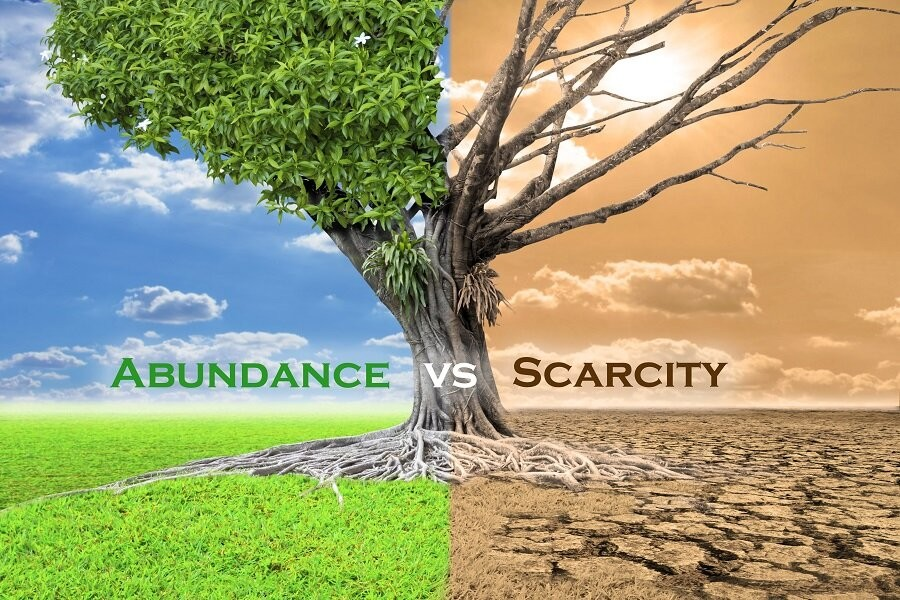
    I tend to have a scarcity mindset – always thinking about if I’ll have enough money, enough time, enough patience, enough of me to go around. And being a foster mom, it always seems like there’s never enough.

    There’s always more babies who need a home. There’s always more time I could spend with my babies. There’s always more therapies and developmental play activities I could be doing with them. There’s always something.

    But in these last few weeks, I’ve been trying really hard to shift that mindset because the truth is, there’s no winning with a scarcity mindset.

    I’ve come to realize that I have a lot. I’m blessed to have had my current baby for more than eight months. I have the money to pay a part-time babysitter who whole-heartedly loves on my baby four half-days a week so that I can focus on my work. I have a community who loves and supports me in all I do, even when I’m doing nothing.

    And I’ve come to realize it’s this community that is the reason I can have so much abundance. A community of other foster parents help me get through the hard court days and the unknowns. A community of psychiatrists and therapists help me get through the worst of my mental health days and enjoy the good ones. A community of friends and family support me through both finances and time to help me keep my sanity through all the days.

    So I’m asking my community for help, and I’m trying to recognize that abundance does not have to come just from me, but it can come from others in my life. I am re-stocking my foster care closet after seven years of fostering, and I have small and big items that need to be replaced.

    If you want to help, I have put together a Baby Wish List that you can order from and have Amazon ship it directly to me. If you want to help but can’t help with the items on the wish list, then I could also use Amazon and DoorDash gift cards!

    If supporting kids directly is more your thing, then I am also starting my toy drive for Snuggle Day 2026. Snuggle Day is a day social workers can shop for free for the kids on their caseload who are in foster care. Some of these kids have foster parents who can afford to give them Christmas presents on their own, and some have taken in so many kids on such a tight budget that they could not have Christmas morning without the social workers’ support.

    If finances are tight but you find yourself with time on your hands, I’m always looking for people to come hang out with me and my babies, especially for a few hours on the weekend. You can snuggle a cute baby, and I can enjoy a hot coffee for once!

    In all of theses ways (and more), I know I have a community that shares out of the abundance they have, even if the world wants us to have a scarcity mindset all too often.

    If you’ve made it this far with me, thank you for the time you’ve given, and thank you for all the ways you share in your abundance, even in times of scarcity.

    Back with a Vengeance

    It’s now been almost three years since I’ve posted anything on this blog. I’ve finished a PhD program (that’s right – I’m Dr. Alicia now), taken in `10 more babies, and started a new job.

    The little boy I thought I would adopt ending up going with another family, and that’s okay. It was what he needed, it was what I needed, and I’m so stoked to still be a part of his life as an auntie.

    Since then, I’ve continued to take medical placements, and I now have a little girl who has some medical needs that have had us in the hospital four times and the ER sixteen times in the eight months she has been with me.

    I never thought I would have a baby for eight months again, yet alone one who is so needy, but I have loved it. I was devastated to lose the sweet baby boy that I thought I would adopt, but I’ve come to realize that adoption is not for me.

    I have built my life around this calling as an ESH mom, and I love it. There are less than twenty of us in my county, and the program is growing smaller as more parents want to adopt or foster long-term and less people are willing to deal with the chaos that comes with emergency placements.

    With the number of babies I have taken in the last seven years (35!!!), I know I am still meeting a need, a desperate need at that. So I will re-enter my calling with a vengeance, knowing that I do exactly what I’m supposed to do exactly where I am at.